
Flying Tragedy at Swansea Sands
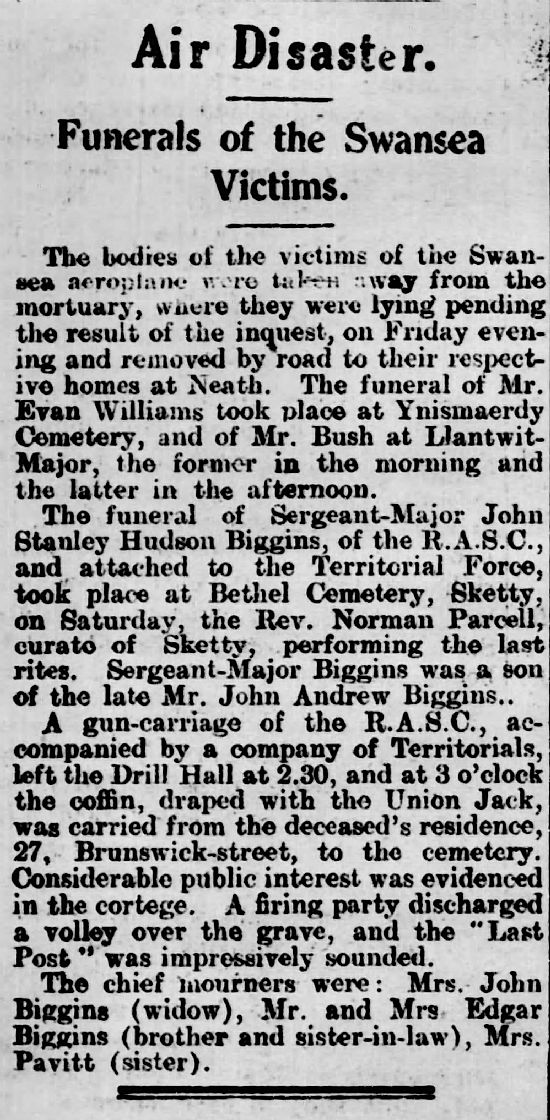
In late September 1922 a road traffic accident occurred at Court Herbert, Neath when a young man aged 18 was injured after being crushed between a motor car and a wall. The young man suffered a leg injury. The driver of the vehicle promised the young man that he would make up any loss of earnings incurred due to the injury, but just a few days later on 3rd October the driver was killed in a flying accident in Swansea. The young injured man was my grandfather Eddie Soderstrom of St. Johns Terrace, Neath Abbey and the driver was Evan Henry Williams of ‘Hillsboro’ on Cimla Road.
This story is unusual due to the very low number of motor cars on the roads in 1922 and even more so in that it involves a flying accident when flying was still in its infancy. Two newspaper cuttings found in grandfather’s diary allow me to add details to the story that I heard as a child.
In 1952, under a regular column titled ‘It was 30 years ago today’ in the South Wales Evening Post, this short article was featured;
‘ Tuesday 3rd October 1922.
An Avro aeroplane crashed in the evening in shallow water off Swansea Sands near Brynmill, the rising tide rapidly covering the three inmates. The men who perished were Mr Evan Williams of Neath, a founder of Welsh Aviation Services who himself held a pilot’s licence; Mr Bush the pilot; and Sergeant Major Biggens RASC of the Drill Hall. Men who gallantly swam out to attempt a rescue were affected by petrol fumes from the burst tank. Later the wreckage was towed high and dry under the eyes of thousands of people. It was to have been Mr Williams’ last flight of the season.’
Evan Williams of ‘Hillsboro’, Cimla Road, Neath is described in the 1921 census as a turf accountant with his office at 11 The Parade. He was 42 years of age at the time of his death and a married man. In the 1911 census he is living in Resolven and describes himself as a financier and commission agent.
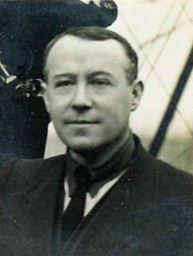
Evan Williams in 1916
He was not, in fact, a founder of the Welsh Aviation Company but had recently purchased four (ex RAF) AVRO 504K aircraft from the Welsh Aviation Company that had recently gone bankrupt. The four aircraft, three with 120hp Le Rhone engines and one with a 80hp Renault engine, were sold to him for £50, £40, £30 and £12.10s respectively. These single engine bi plane bombers had been produced in large numbers during World War 1, with 8,970 constructed. They became obsolete as frontline aircraft and were used extensively as trainers. Following the end of the war there were large numbers of surplus aircraft available for pilot training, pleasure trips, banner flying and even barnstorming exhibitions.
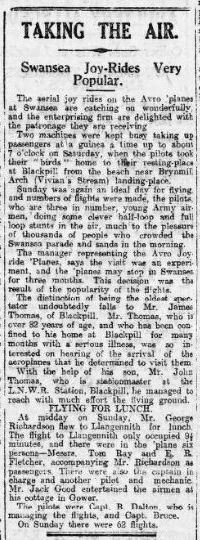
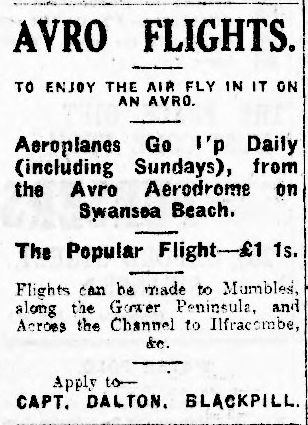
At this time, it became very popular to offer and experience joyrides in aeroplanes. These joyrides were available at various locations around the UK with a short trip costing 1 Guinea (approximately £100 today). The AVRO Transport Company flew joyrides in AVRO 504K aircraft from the beach at Brynmill, Swansea from July to October 1919 before it ceased trading in early 1920; although flights continued under licence. In December 1920 the Welsh Aviation Company was set up using 504K aircraft but folded in February 1922 after barely a year trading. At this point Evan Williams stepped in. Described as a financier and most likely a man with a keen eye for a business opportunity, he purchased the bankrupt stock of the Welsh Aviation Company.
Although Evan Williams claimed to have a pilot’s licence the pilot on this tragic occasion was Frederick Percival Bush (aged 33) of Norton Lane in Blackpill, where he lived with his wife Nellie. They had been married for three months. Fred Bush was born in Canning Town, London, however, his family settled in Neath with his father Alfred Bush being listed in the census as an India Rubber Merchant from Silvertown, London and his mother Mary McLachlan being from Australia. The family had lived at 81Gnoll Park Road, but were now at Fernbank, Neath.
Percy Bush enlisted on 11th Feb 1915 with the Royal Marines Divisional Train which was a horse drawn transport unit for the Royal Marines Divisional providing logistics support to the Royal Naval Division. He became a flight cadet on 1st April 1918 receiving his pilot training and finishing his military career with 44 Squadron in August 1919.
The third passenger was Sergeant Major John Stanley Hudson Biggins of the Royal Army Service Corps. He was a married man living at 27 Brunswick Street, Swansea.
The inquest into the accident recorded that death was due to asphyxiation through drowning for all three men. After being sent up for a trip, the machine was preparing to alight when it nose-dived into the bay.
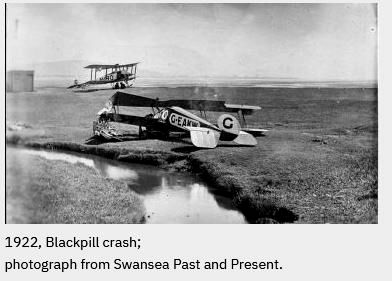
SOURCES
South Wales Evening Post - 3rd October 1922
South Wales Evening Post - 2nd August 1919
Cambrian Daily Leader – 26th July 1915
Aircraft and accident details - asn.flightsafety.org
Photograph of accident - Swansea Past and Present.
Photograph of Evan Williams - afleetingpeace.org.
For another story about the Soderstrom family –
go to the top of this page and under News Index - navigate to
12th October 2017- SS.Main – The Sinking of a Skewen ship
